Words by Alice Blackwood
Photography by Anjie Blair
Kate Moss and Rose Kiselev of This Vacant Space are known for creating homes that expressively harness colour to enhance everyday living quality. Based out of Hobart, Kate and Rose are experienced in the complexities of home renovation and redesign, as well as enthusiastic advocates of Tasmanian living.
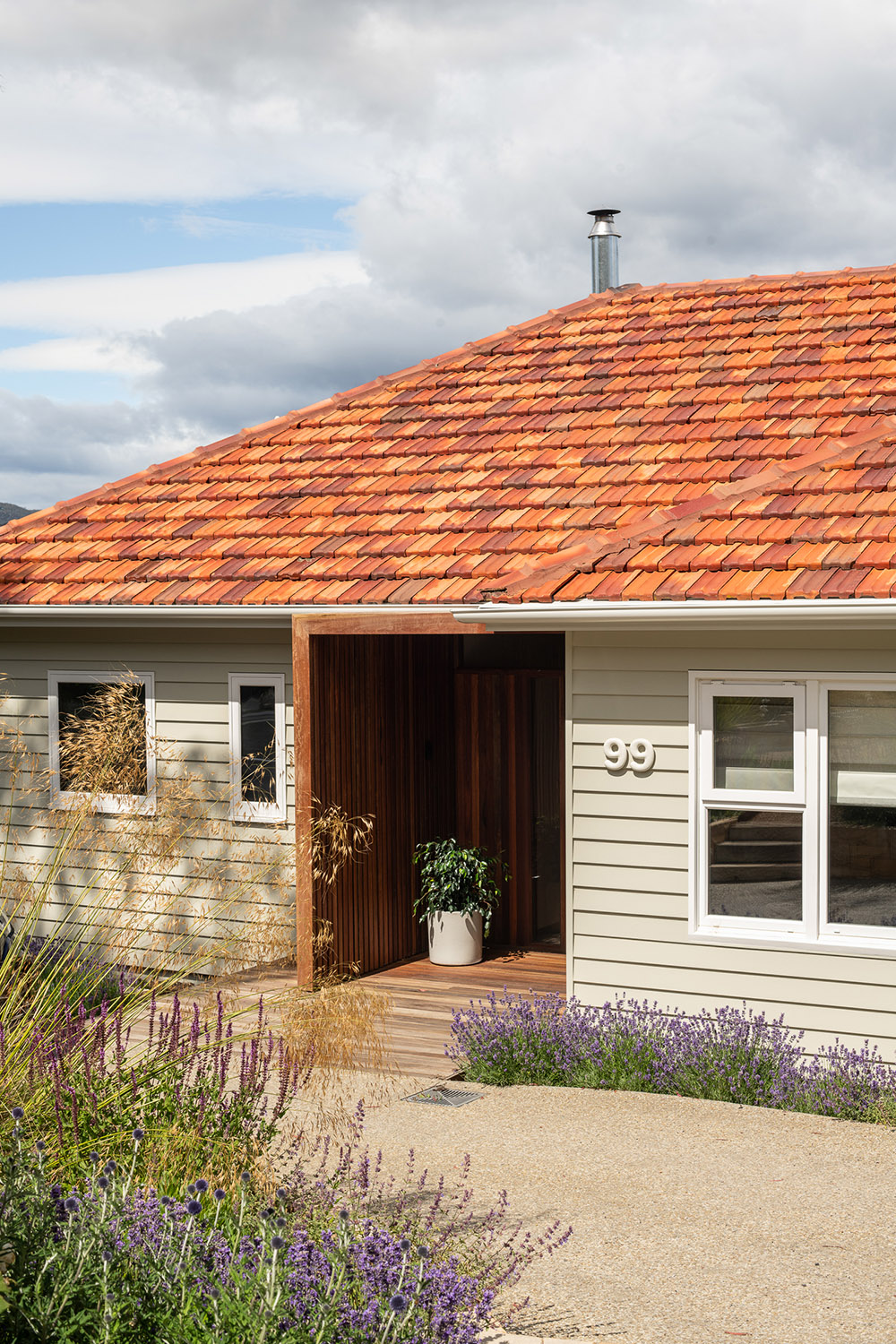
Lagom House is a modest 120 square-metre dwelling, located in the suburb of Lindisfarne, Hobart. Its position finds it backing onto the beautiful Derwent River with views to kunanyi / Mount Wellington. The clients, a family of three, had thoroughly considered what they sought from a new home and, with an eye towards Swedish design principles, opted to work within the existing floorplate of their current home.
“The clients had lived in Sweden for a period of time, and really loved the way of life there,” says Rose. Specifically, their appreciation for home as a supportive, mood-lifting environment, and the belief that bigger is not always better. “They did not feel the need to add more square metres, rather increase the usability of the space that they did have, and how that felt and how that impacted their day-to-day life,” she says.
With these intentions underpinning the brief, Kate and Rose focused on the careful reorganisation of the existing floorplate to bring more space into the kitchen and dining zone, reflecting the family’s love of cooking. In doing so, they improved circulation flow throughout the house and reorganised storage, finding extra space for a laundry and – essential to the family – reading nooks with books in almost every room. “The floorplan worked out well,” says Kate reflecting on the satisfaction of achieving the complex tessellation of spaces.
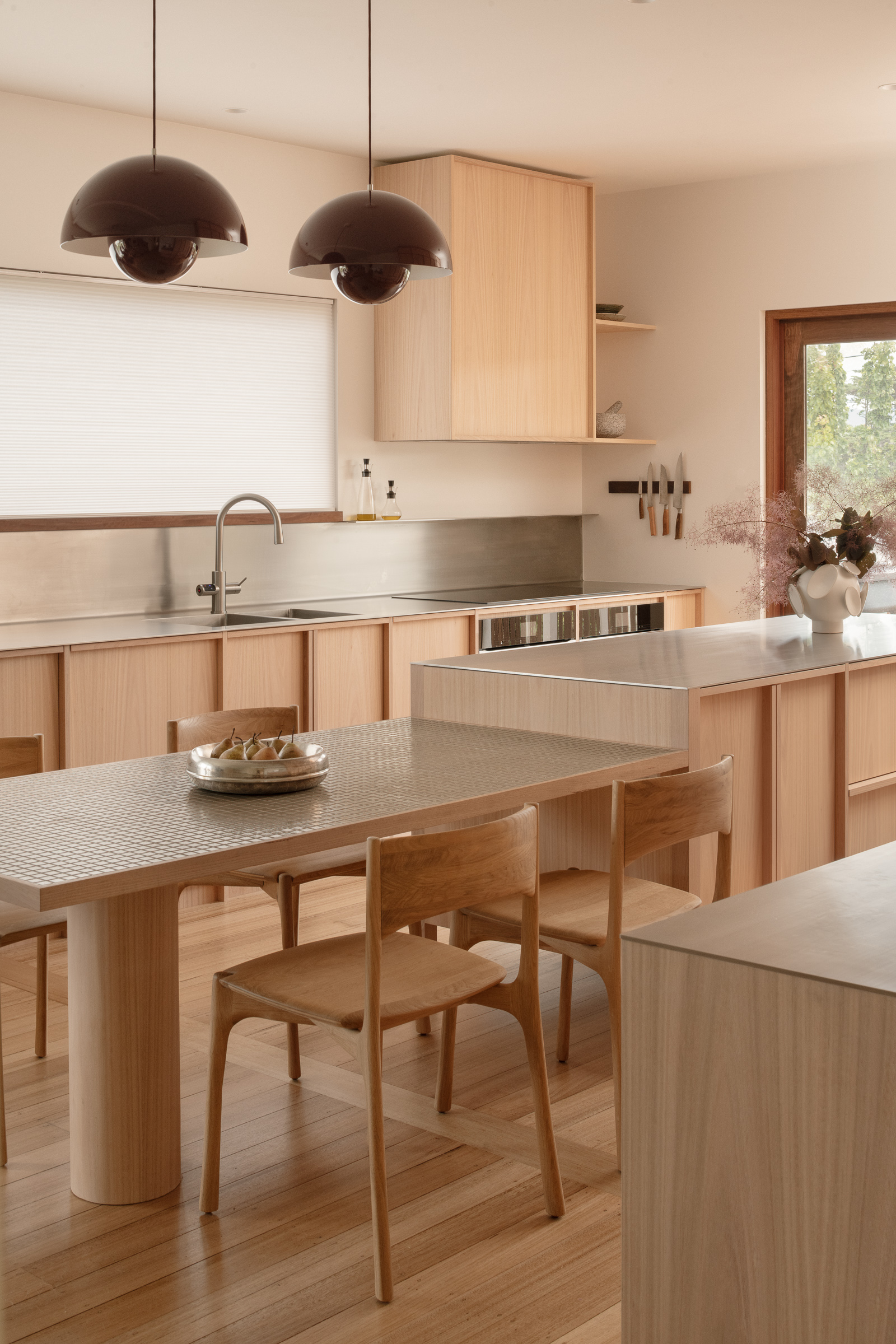
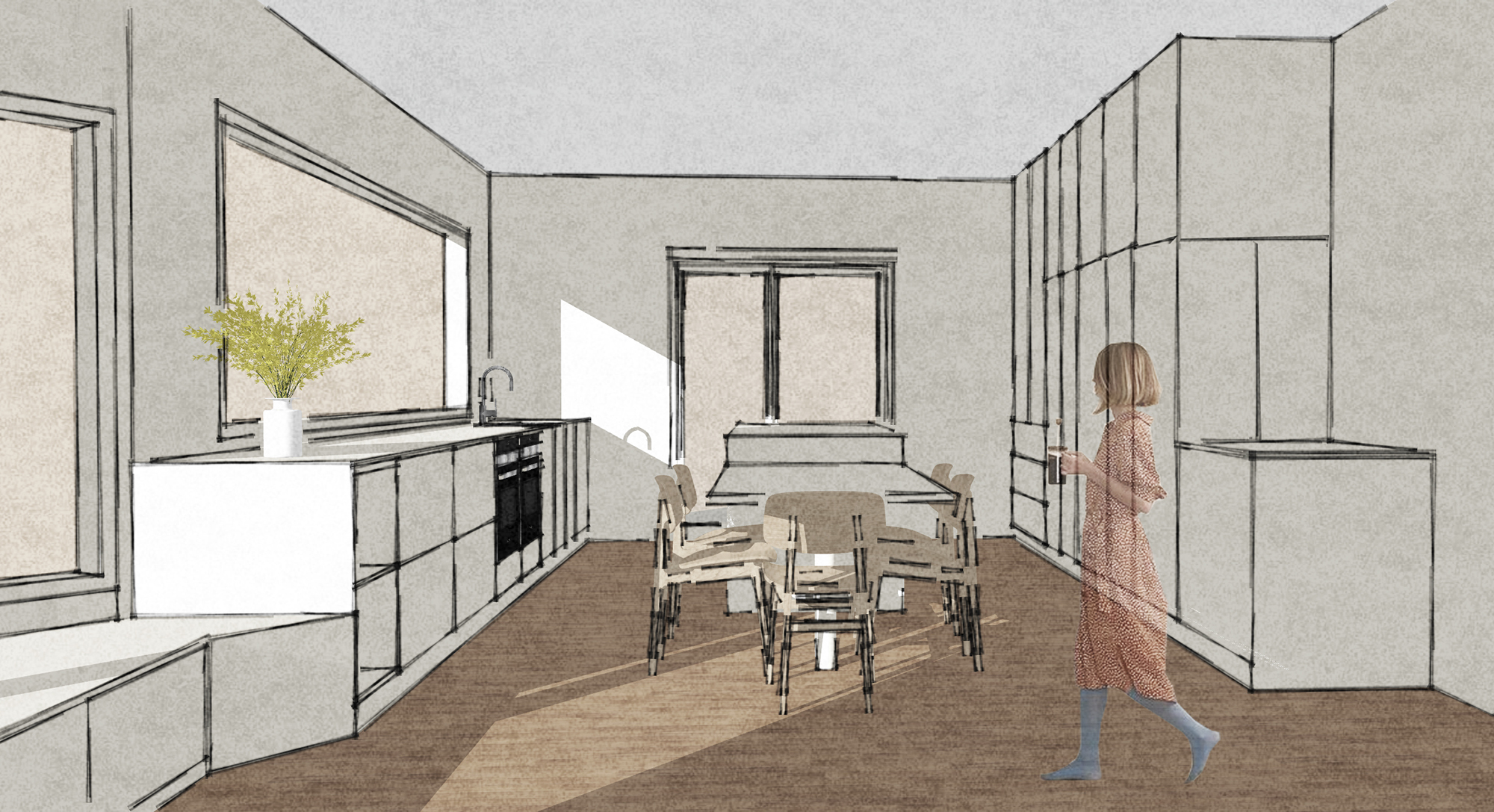
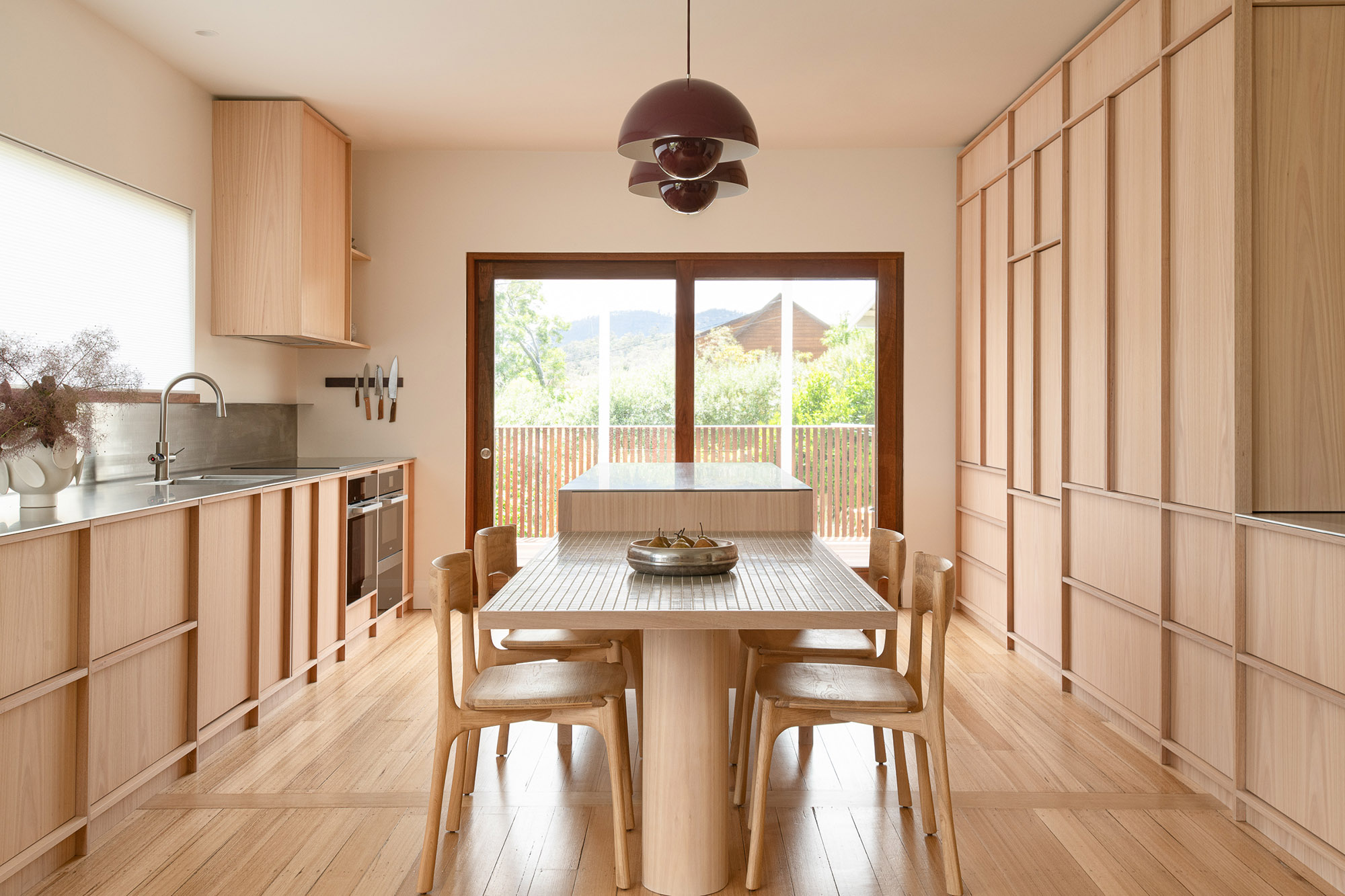
An internal wall was knocked down in order to merge kitchen and dining, with a large dining table positioned in the centre of the kitchen. Three banks of kitchen joinery were built into the space, providing much needed storage, creating circulatory paths down either side of the table. Another key manoeuvre was to open this space out to its best views, and bring more natural light in, says Kate. “The original house had no windows along that ‘prime real estate’ side” – where the ocean meets the mountains. A large, long window was installed in the kitchen to frame the beautiful landscape, with a reading nook positioned neatly beneath.
The designers proposed a colour scheme drawn from the surrounding landscape of ocean and mountain, tonally organic and uplifting, yet shifting from room to room, offering the residents myriad settings to suit their mood and moment. “We place a lot of importance on how your home impacts your day-to-day mental health and mood. We’re very focused on creating spaces you come home to that can really lift and enhance your day – and this project really hones in on that,” reflects Rose.
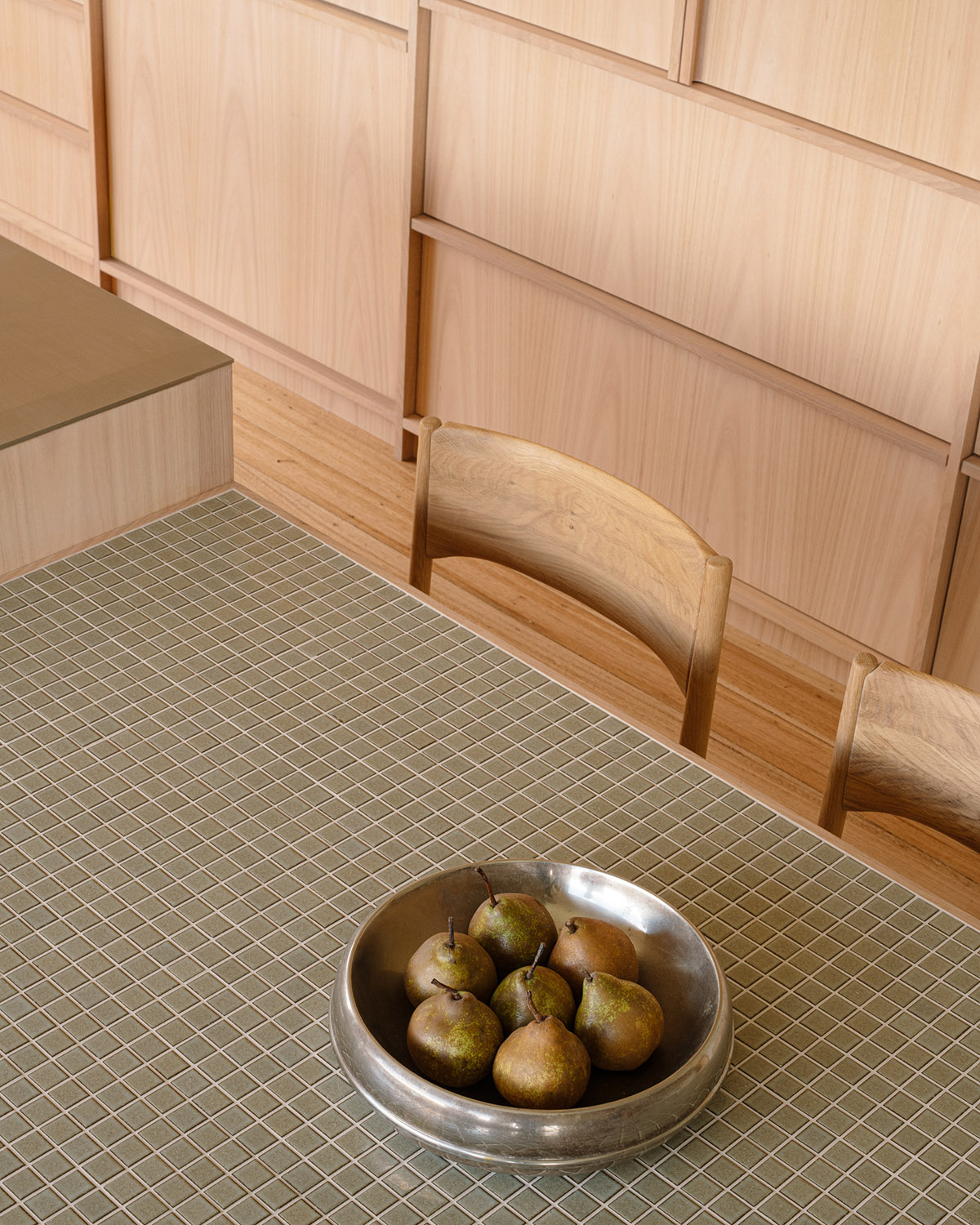
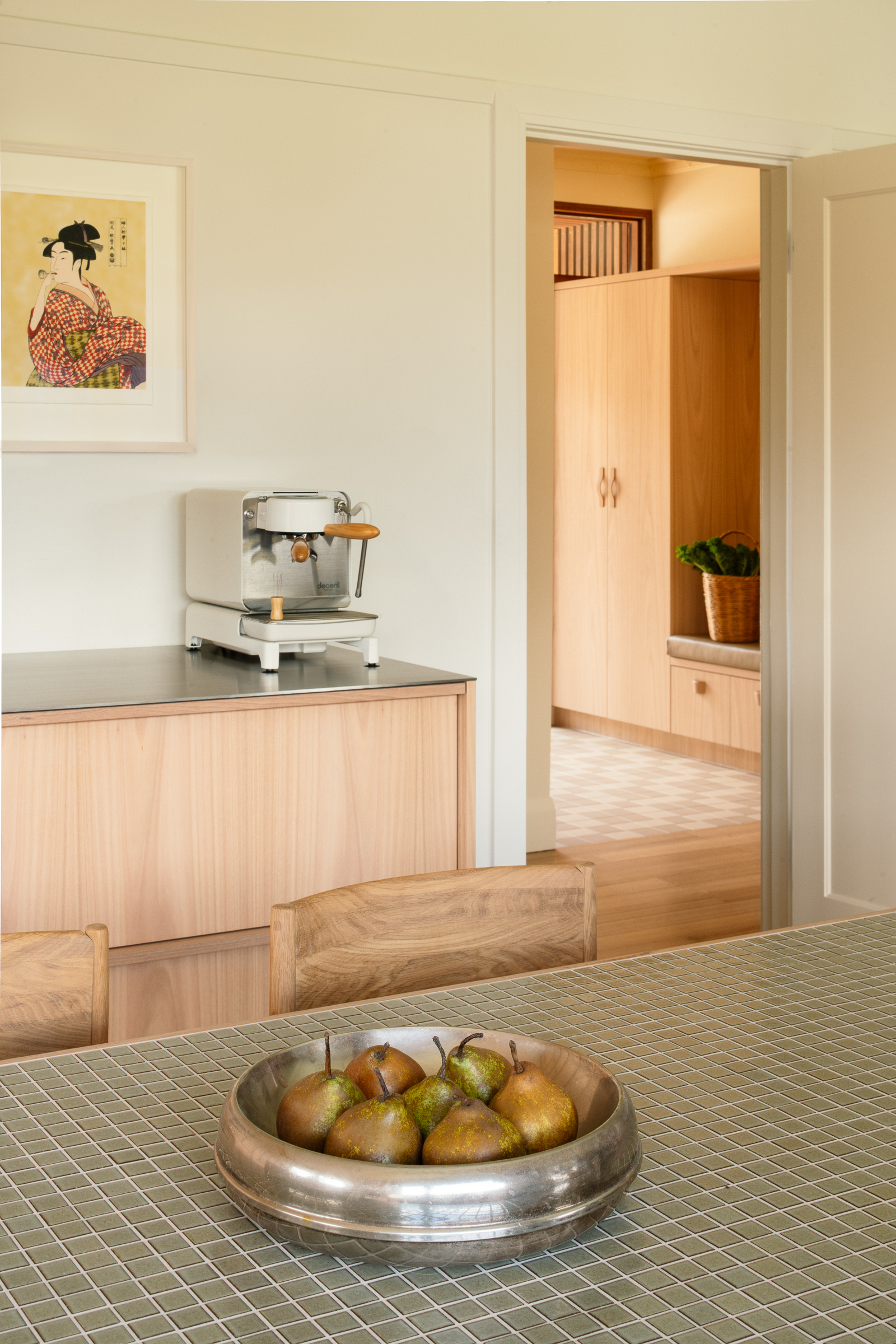
The kitchen is designed to be the brightest room in the home, tonally referencing the Derwent River and gum trees. Tasmanian-made timber joinery with custom routed handles brings cohesion to the space, while Rose and Kate have employed other materials to create a subtle sense of differentiation between kitchen preparation area and dining. The smooth reflective surface of the stainless-steel benchtop appears almost warm within the space. The dining table, finished in Japanese designed Arute Saita tiles, brings a textural, tender green facet to the space.
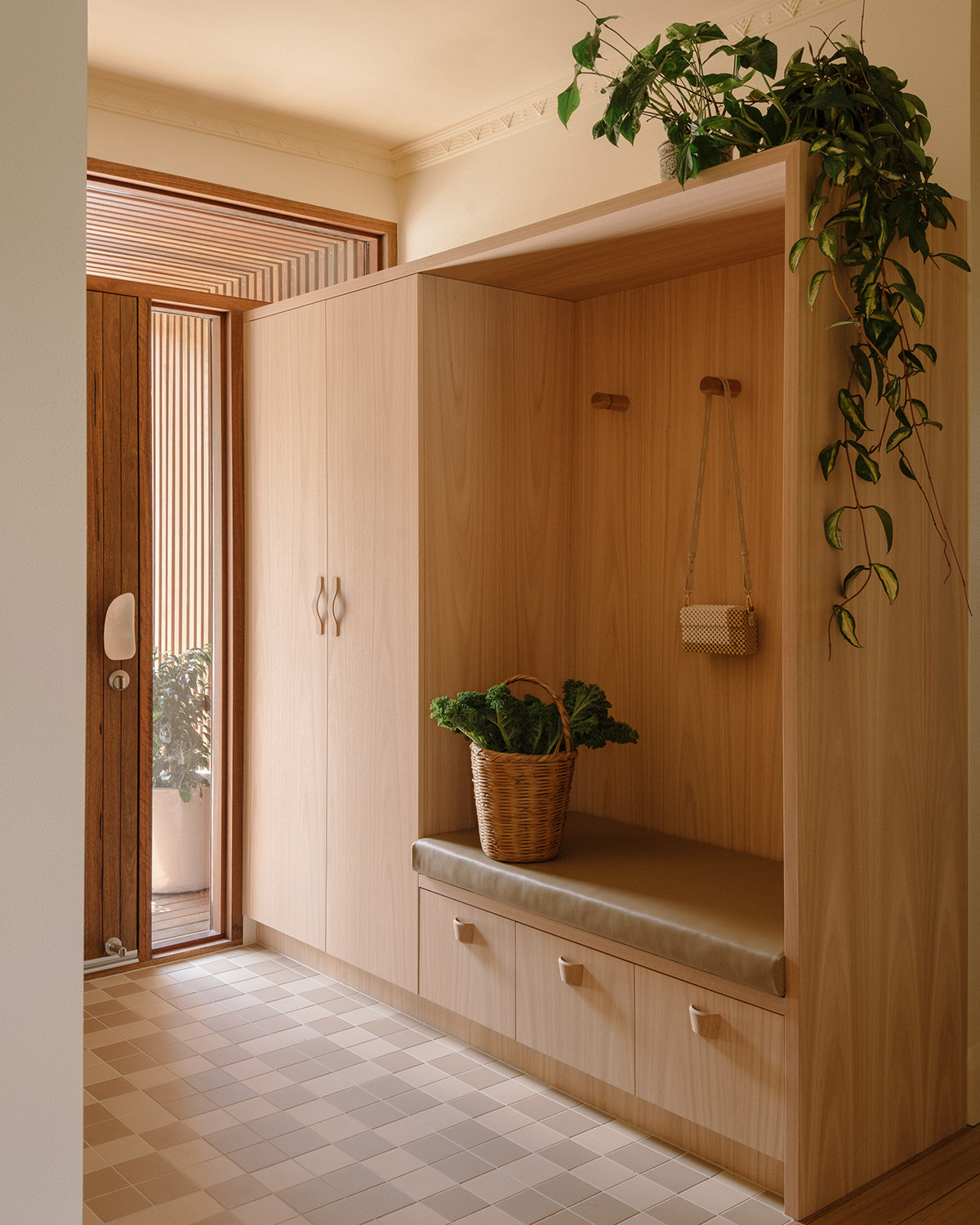
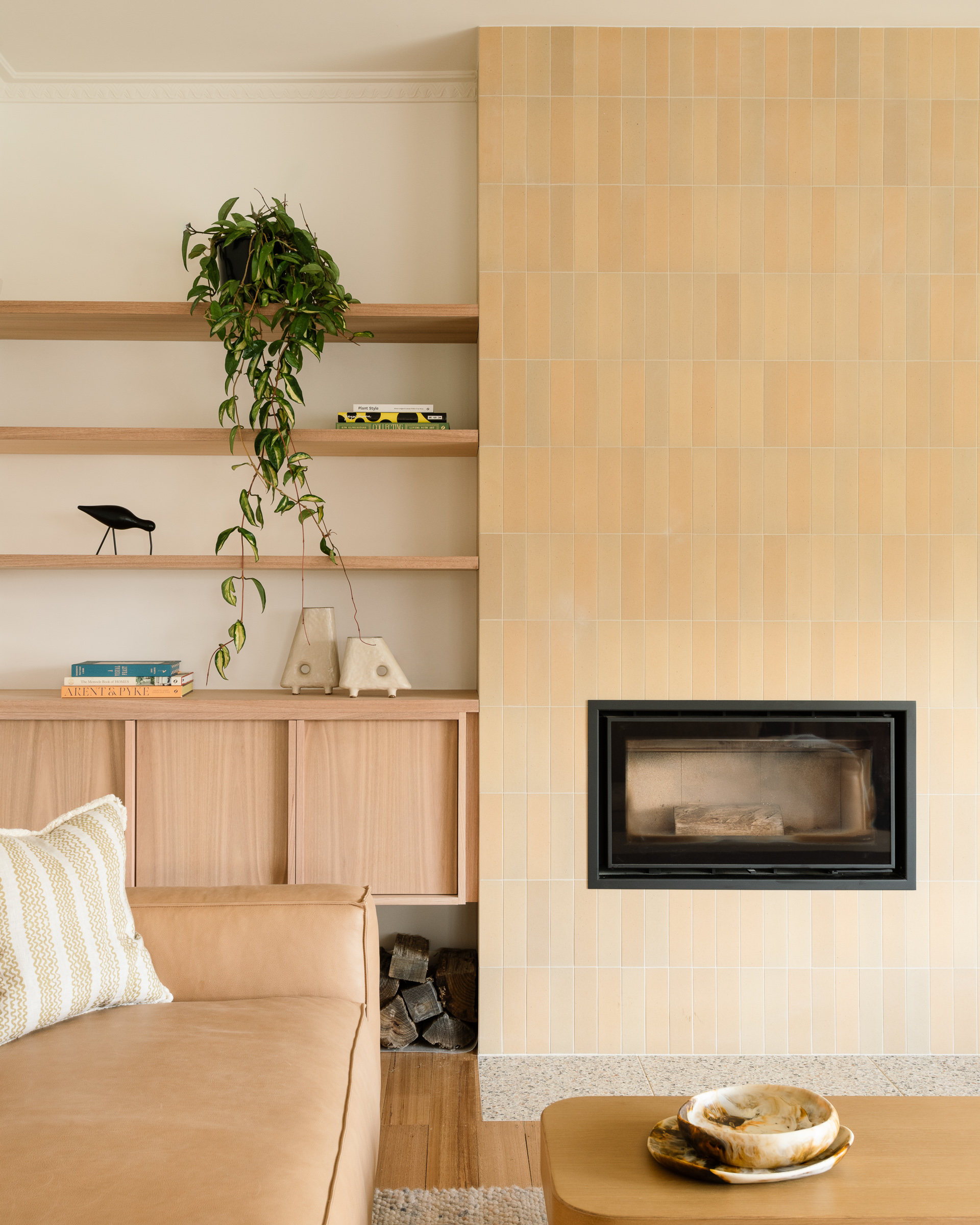
A warm, bright yellow colour scheme extends into the entry zone and lounge room, expressed across timber, tan leather and hand-crafted Japanese tiles. Kate and Rose have used an INAX Fabe tile, notable for its brick-like appearance and colour variation. Cladding the room-height fireplace façade, the tiles’ tonal shifts have been arranged just-so to evoke the sense of a landscape seen from a great distance.
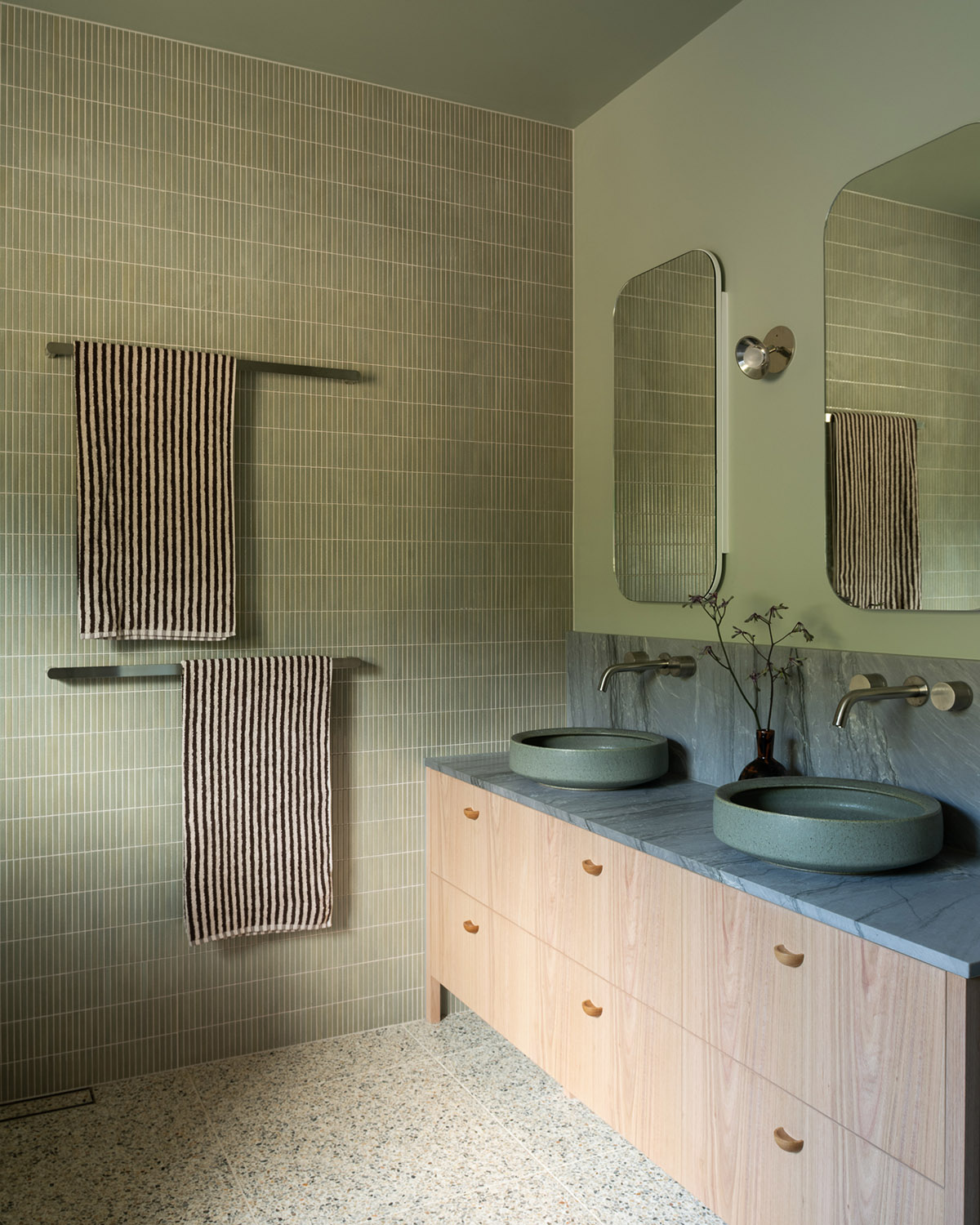
A moodier set of colour tones are reserved for quieter spaces, such as bathroom and bedroom. These are punctuated by special Tasmanian crafted features, from custom timber door handles to locally made ceramic bathroom basins. “There were many lovely, small moments like these where we able to commission local makers and bring in really nice details,” says Kate.
She and Rose love Lagom House for its simplicity and imagination. “We are very big Tassie advocates, for the lifestyle and living here. And with that comes some really, beautiful homes – often renovations with a lot of life left in them,” says Rose. Lagom House gave them the opportunity to do more with less, finding affordances within a tight footprint. Their love of colour and colour drenching runs through the project as a deliberate strategy: spaces designed to lift and enhance as a form of everyday wellbeing, and to create a sense of connection to each space.